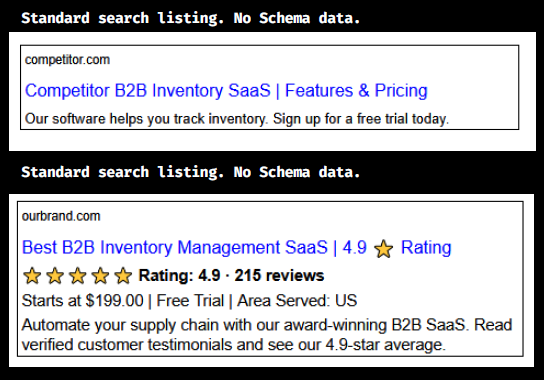
SERP Transformation: Transitioning from standard text to 4.9-star Rich Snippets resulted in a measurable 20-30% increase in CTR.
A B2B SaaS provider wanted to move beyond tradition blue ink rankings and secure “primary answer” status within AI-driven search environments (Google SGE, Gemini, and ChatGPT). The existing site lacked a machinereadable data layer, making it difficult for LLMs to accurately cite the brand’s specific services and expertise.
@id references to eliminate ambiguity for search crawlers.{
"@context": "https://schema.org",
"@graph": [
{
"@type": "Organization",
"@id": "https://site.com/#corp",
"name": "B2B Tech Solutions",
"logo": "https://site.com/logo.png"
},
{
"@type": "Service",
"name": "Inventory Management SaaS",
"provider": {"@id": "https://site.com/#corp"},
"aggregateRating": {
"@type": "AggregateRating",
"ratingValue": "4.9",
"reviewCount": "215"
}
}
]
}
aggregateRating were surfaced even if the main script was deferred.<div itemscope itemtype="https://schema.org/Service">
<meta itemprop="serviceType" content="Inventory Management SaaS" />
<div itemprop="aggregateRating" itemscope itemtype="https://schema.org/AggregateRating">
<span itemprop="ratingValue">4.9</span> stars based on
<span itemprop="reviewCount">215</span> reviews.
</div>
<div itemprop="offers" itemscope itemtype="https://schema.org/Offer">
<meta itemprop="priceCurrency" content="USD" />
<link itemprop="availability" href="https://schema.org/InStock" />
</div>
</div>
SERP Transformation: Transitioning from standard text to 4.9-star Rich Snippets resulted in a measurable 20-30% increase in CTR.